PDF Automation Digital Signatures Compliance

Sign PDF documents with X.509 certificates using PAdES standards

Automate legally-compliant digital signatures for contracts, agreements and official documents

Download Template JSON · n8n compatible · Free
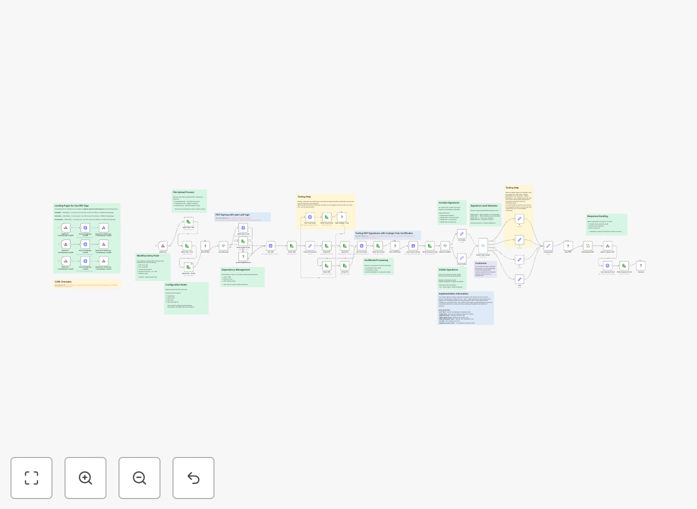
PDF digital signature workflow preview

What This Workflow Does

This automation solution enables businesses to digitally sign PDF documents with X.509 certificates while maintaining compliance with PAdES (PDF Advanced Electronic Signatures) standards. The workflow automates the entire signing process, eliminating manual steps while ensuring legal validity.

Digital signatures created through this workflow provide cryptographic proof of document integrity, signer identity verification, and non-repudiation - meaning signers cannot later deny having signed the document. This is particularly valuable for contracts, legal agreements, financial documents, and other paperwork requiring formal authentication.

How It Works

1. Document Preparation

The workflow receives PDF files ready for signing, either from a folder watch, email attachment, or API call. The system verifies document integrity before proceeding.

2. Certificate Validation

The X.509 certificate (either provided or from a keystore) is validated against trusted certificate authorities to ensure its authenticity and that it hasn't been revoked.

3. PAdES Signature Application

The workflow applies a PAdES-compliant digital signature to the PDF, embedding cryptographic proof of the signer's identity and the document's contents at the time of signing.

4. Audit Trail Creation

Each signed document generates a detailed audit log containing timestamp, certificate details, and cryptographic hash for future verification purposes.

Pro tip: Store signed documents with their audit trails in a secure document management system for compliance purposes.

Who This Is For

This workflow is ideal for:

  • Legal firms processing contracts and agreements
  • Financial institutions handling loan documents and disclosures
  • HR departments managing employment contracts
  • Government agencies processing official forms
  • Any business needing legally-binding digital signatures

What You'll Need

  1. An n8n instance (self-hosted or cloud)
  2. Valid X.509 certificates (from a certificate authority)
  3. PDF documents needing signatures
  4. (Optional) A document storage system for archiving

Quick Setup Guide

  1. Import the JSON template into your n8n instance
  2. Configure your certificate source (file upload, keystore, or API)
  3. Set up your document input method (folder watch, email, or API)
  4. Test with sample documents verify signature compliance
  5. Deploy to production and monitor audit logs

Key Benefits

Legal compliance: PAdES signatures meet EU eIDAS and other international standards for electronic signatures.

Time savings: Automating signatures eliminates manual processing, reducing document turnaround time by 80-90%.

Security assurance: Cryptographic proof of document integrity prevents tampering and provides non-repudiation.

Scalability: Process hundreds of documents simultaneously without additional staffing.

Frequently Asked Questions

Common questions about PDF digital signatures and automation

PAdES signatures provide legally-recognized proof of document integrity and signer identity. They comply with eIDAS regulations in the EU and similar standards globally, making them admissible in court. The cryptographic proof ensures no one can deny having signed or claim the document was altered after signing.

For businesses, this eliminates the need for physical signatures or notarization in many document types. Courts and regulators treat properly implemented PAdES signatures with the same weight as handwritten signatures.

  • Meets EU eIDAS and US ESIGN Act requirements
  • Reduces fraud risk compared to basic electronic signatures
  • Eliminates paperwork and scanning processes

X.509 certificates provide cryptographic proof of the signer's identity by linking their digital signatures to verified entities. Certificates issued by trusted Certificate Authorities (CAs) confirm the signer's identity through vetting processes similar to notarization.

When embedded in a PAdES signature, the certificate creates an unforgeable link between the document and the verified signer. Businesses can use organizational certificates for company-wide signing or individual certificates for specific authorized signers.

  • Prevents impersonation of signatures
  • Provides audit trails showing who signed
  • Enables role-based signing permissions

High-volume, time-sensitive documents see the greatest benefits from automated digital signatures. Contracts, service agreements, financial approvals, and compliance paperwork often require multiple signatures from multiple parties with audit trails.

HR departments use automated signing for offer letters and onboarding documents. Financial institutions process loan approvals faster while maintaining compliance. Legal firms handle client contracts without physical meetings or paperwork delays.

  • Contracts and agreements
  • Financial disclosures and approvals
  • HR and employment documents

Most PDF readers (like Adobe Acrobat) can validate PAdES signatures by checking the certificate chain and timestamp. The validation confirms the document hasn't been altered since signing and that the certificate was valid at signing time.

For business systems, API-based validation services can automatically check batches of documents. This is particularly useful for compliance audits or when processing signed documents from customers or partners.

  • Built-in validation in PDF software
  • Automated checks via validation APIs
  • Regular certificate revocation list checks

Basic electronic signatures (like scanned images) prove intent but lack cryptographic integrity. Advanced signatures (PAdES) use public key infrastructure to mathematically prove the signer's identity and document contents at signing time.

Legally, advanced signatures carry stronger weight in disputes. Businesses dealing with sensitive documents or regulatory requirements benefit from the additional security and non-repudiation features.

  • Basic signatures: Convenient but weaker legally
  • Advanced signatures: Court-admissible with tamper-proofing
  • Choose based on document importance and risk

Most document systems (SharePoint, Google Drive, Dropbox) can integrate with automated signing workflows through APIs or folder monitoring. The signed documents and audit trails can be automatically stored with your existing records.

The workflow can trigger from document uploads or status changes in your DMS systems. Metadata including signing timestamps and certificate details can be stored alongside the documents for easy retrieval and verification.

  • API integrations with major DMS platforms
  • Folder watch triggers for simpler systems
  • Metadata preservation for searchability

Absolutely! GrowwStacks specializes in building tailored document automation solutions. While this free template handles basic signing, we can create workflows that integrate with your specific systems, compliance requirements, and business processes.

Custom solutions might include multi-party signing sequences, approval workflows before signing, integration with your CRM or ERP systems, and automated archival with your document management platform.

  • Tailored to your existing tech stack
  • Custom approval and signing workflows
  • Enterprise-grade security and compliance

Need a Custom PDF Signing Automation Built?

This free template is a starting point. Our team builds fully tailored automation systems systems for your specific needs.