AI Analysis HR Automation Web Scraping Google Gemini Market Research

Automate Glassdoor Company Analysis with AI

Free n8n workflow to scrape, summarize, and monitor Glassdoor reviews using Google Gemini AI—delivering actionable HR insights automatically.

Download Template JSON · n8n compatible · Free
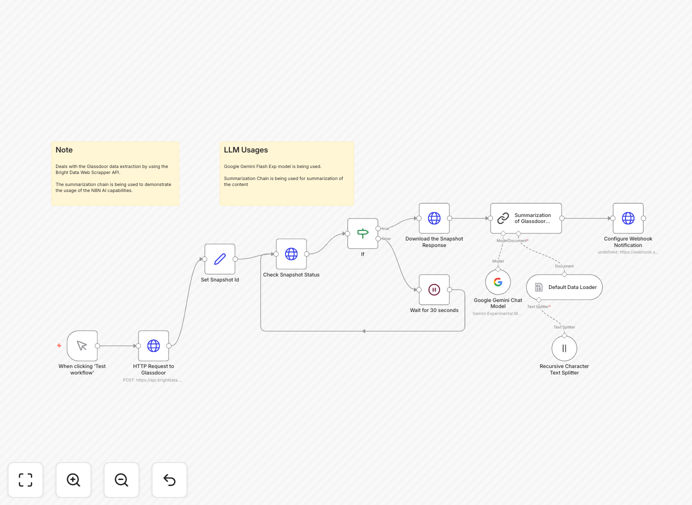
Visualization of Glassdoor review data being processed through AI automation workflow

What This Workflow Does

Manually analyzing hundreds of Glassdoor reviews is time-consuming, subjective, and doesn't scale. This automation solves that by combining web scraping with AI analysis to deliver consistent, actionable insights about company perception and employee sentiment.

The workflow automatically collects Glassdoor company data via Bright Data's web scraping API, processes the content through Google Gemini AI for summarization, and delivers structured insights to your HR dashboard or leadership team. It transforms raw reviews into strategic intelligence about employer brand strengths, weaknesses, sentiment trends, and competitive positioning.

Instead of spending hours reading reviews each month, you get automated reports highlighting key themes around culture, management, compensation, and work-life balance—enabling data-driven decisions about employer branding and retention strategies.
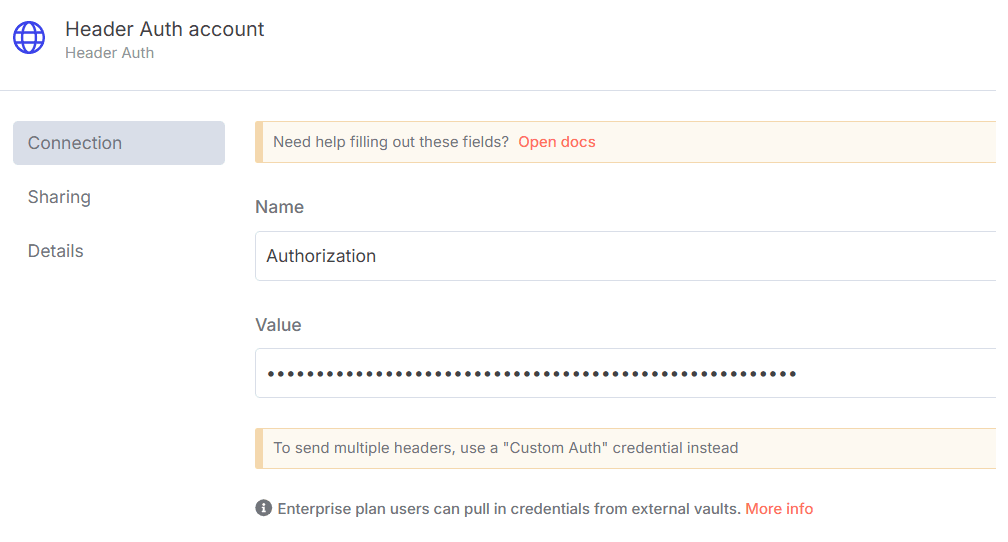
Screenshot showing authentication setup for Bright Data web scraping API in n8n
Configuration for Bright Data API authentication in n8n's credential manager

How It Works

1. Trigger & Data Collection

The workflow begins with an HTTP request to Glassdoor via Bright Data's Web Unlocker API. This bypasses anti-scraping protections to collect comprehensive company review data, including ratings, written feedback, and metadata about review dates and reviewer roles.

2. Processing & Polling

After initiating the scrape, the workflow polls Bright Data for completion and downloads the response when ready. This ensures reliable data collection even for large review datasets that take time to process.

3. AI Analysis & Summarization

The collected Glassdoor data is sent to Google Gemini AI with custom prompts designed to extract key insights. The AI identifies sentiment patterns, recurring themes, strength/weakness analysis, and generates executive summaries suitable for leadership reporting.

4. Delivery & Integration

Final insights are formatted and delivered to configured endpoints—this could be Slack for HR teams, Notion for documentation, Google Sheets for tracking, or custom dashboards. The workflow can be scheduled to run weekly, monthly, or triggered by specific events.

Who This Is For

This automation is ideal for HR professionals, talent acquisition teams, employer branding specialists, and business intelligence analysts. Companies undergoing growth, facing retention challenges, or competing for talent will find particular value.

It's equally valuable for market researchers analyzing competitor employee sentiment, investors evaluating company culture as part of due diligence, and consultants providing employer branding recommendations to clients.

What You'll Need

  1. Bright Data account with Web Unlocker API access for Glassdoor scraping
  2. Google Gemini API key or access through Vertex AI
  3. n8n instance (cloud or self-hosted) to run the workflow
  4. Destination endpoint such as Slack webhook, Notion database, or Google Sheets
  5. Target company Glassdoor URL for the organization you want to analyze

Pro tip: Start with analyzing your own company first to validate insights against internal knowledge. This builds confidence in the AI's analysis before using it for competitor research.

Quick Setup Guide

  1. Download and import the JSON template into your n8n instance
  2. Configure Bright Data credentials in n8n's credential manager using Header Authentication with your Web Unlocker token
  3. Add your Google Gemini API key to the AI node credentials
  4. Update the Glassdoor company URL in the HTTP Request node to target your desired organization
  5. Set your output destination in the final webhook or integration node
  6. Test with a manual trigger to verify data flow and adjust AI prompts if needed
  7. Schedule the workflow for regular execution (weekly recommended)

Key Benefits

Save 20+ hours monthly on manual review analysis. What previously required HR teams to read and categorize hundreds of reviews now happens automatically with consistent, unbiased analysis.

Identify sentiment trends before they become retention crises. Early detection of negative sentiment shifts allows proactive intervention on cultural or management issues.

Benchmark against competitors objectively. Compare your employer brand perception against key talent competitors using the same analysis criteria.

Create data-driven employer branding strategies. Base your EVP messaging and recruitment marketing on actual employee sentiment rather than assumptions.

Scale analysis across multiple companies or locations. Easily expand from analyzing one company to monitoring dozens without proportional time increase.

Frequently Asked Questions

Common questions about Glassdoor analysis automation and AI integration

Automated Glassdoor analysis provides real-time insights into employee sentiment, helping companies identify strengths, weaknesses, and emerging issues before they escalate. Manual review of hundreds of reviews is time-consuming and subjective, while AI-powered automation delivers consistent, actionable summaries for leadership decision-making.

For example, a tech company might discover through automated analysis that compensation complaints are increasing 30% quarter-over-quarter, enabling them to address salary bands before losing key engineers to competitors.

Combining web scraping with AI transforms raw data into strategic intelligence. Scraping collects comprehensive review data at scale, while AI identifies patterns, sentiment trends, and key themes that would be missed in manual analysis.

This combination saves 90% of research time and provides deeper insights than either method alone. A retail chain could use this approach to monitor sentiment across hundreds of locations simultaneously, identifying regional variations in management effectiveness that would be impossible to track manually.

Modern AI models like Google Gemini achieve 85-95% accuracy in identifying sentiment and extracting key themes from employee feedback. They excel at pattern recognition across large datasets, consistently identifying recurring issues around culture, management, compensation, and work-life balance.

While AI may occasionally misinterpret sarcasm or nuanced language, it avoids the cognitive bias and fatigue that affect human reviewers. Most businesses find the consistency and scalability far outweigh minor accuracy trade-offs.

Businesses gain insights into employer brand perception, competitive positioning, retention risks, and areas for improvement. Specific insights include sentiment trends over time, comparison against industry benchmarks, and identification of recurring complaints or praise.

Practical applications include tracking the impact of new benefits programs, monitoring sentiment after leadership changes, identifying departments with consistently low ratings, and benchmarking against key talent competitors to inform recruitment strategies.

Companies should monitor Glassdoor reviews at least monthly for ongoing sentiment tracking, with more frequent monitoring during periods of organizational change, after major announcements, or when negative trends emerge.

Automated workflows can run weekly or even daily without additional effort, ensuring leadership always has current insights. The ideal frequency depends on company size and review volume—larger organizations with hundreds of monthly reviews benefit from weekly analysis, while smaller companies may find monthly sufficient.

Limitations include potential data access restrictions from Glassdoor's terms, the need for human interpretation of nuanced context, and occasional false positives in sentiment analysis. Automated systems may also miss subtle cultural references or inside jokes that human reviewers would understand.

The most effective approach combines automated analysis with periodic human review to validate findings and add strategic context. This hybrid model leverages AI for scale and consistency while maintaining human judgment for complex interpretation.

Yes, GrowwStacks specializes in building custom automation solutions for employer brand monitoring and HR analytics. We can create tailored workflows that integrate with your existing HR systems, add competitive analysis against specific companies, and customize reporting formats for your leadership team.

Our team works with you to understand your specific use case, whether you need multi-company monitoring, integration with BambooHR/Workday, custom alert thresholds, or specialized analysis for particular departments or regions. We handle the technical implementation so you can focus on strategic decision-making.

  • Integration with existing HRIS and analytics platforms
  • Custom competitive benchmarking against your talent competitors
  • Automated alerts when sentiment crosses defined thresholds
  • Executive dashboards tailored to your leadership reporting needs

Need a Custom Glassdoor Analysis Automation?

This free template is a starting point. Our team builds fully tailored automation systems for your specific business needs.