Zapier Google Sheets Slack GPT-4 AI

Automated Tax Deadline Management with AI

Proactively monitor compliance deadlines with GPT-4 analysis and smart alerts

Download Template JSON · n8n compatible · Free
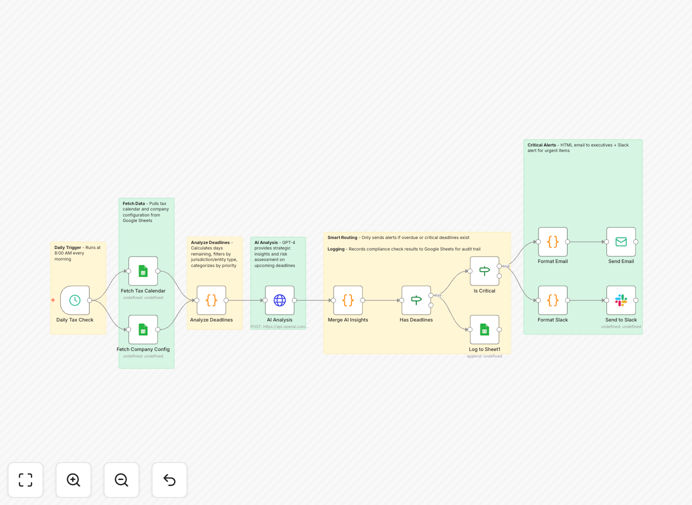
Tax deadline automation workflow diagram showing integration between Google Sheets, GPT-4 and Slack

What This Workflow Does

This AI-powered automation solves the critical business problem of missed tax deadlines and compliance risks. Finance teams often struggle with manually tracking hundreds of tax deadlines across multiple jurisdictions, leading to penalties and unnecessary stress.

The system automatically monitors your tax calendar, analyzes upcoming deadlines with GPT-4 for risk assessment, and sends intelligent alerts only when immediate action is required. It reduces manual tracking work by 80% while improving compliance accuracy.

How It Works

1. Daily Deadline Check

The workflow runs automatically every morning at 8 AM, pulling your tax calendar from Google Sheets and filtering active deadlines.

2. AI-Powered Analysis

GPT-4 evaluates each upcoming deadline, considering jurisdiction-specific rules and your company's entity type to provide strategic recommendations.

3. Priority Classification

Deadlines are categorized as Overdue, Critical (≤3 days), High Priority (≤7 days), or Medium Priority (≤30 days) based on remaining time.

4. Smart Alert System

Critical alerts are sent to executives via email and Slack, while daily summaries go to the finance team channel. The system only notifies when action is needed.

Who This Is For

This automation delivers the most value for:

  • Accounting firms managing multiple client deadlines
  • Finance teams at corporations with complex tax obligations
  • Startups needing to establish reliable compliance processes
  • Businesses operating in multiple tax jurisdictions

What You'll Need

  1. Google Sheets with your tax calendar data
  2. Slack workspace with appropriate channel access
  3. OpenAI API key with GPT-4 access
  4. Email SMTP credentials for sending alerts

Quick Setup Guide

  1. Download and import the JSON template into your n8n instance
  2. Configure your Google Sheets IDs for tax calendar and logs
  3. Add Slack and email credentials
  4. Test with sample data before activating the daily trigger
  5. Customize alert thresholds if needed

Pro tip: Start with a test Slack channel and internal email before rolling out to executives.

Key Benefits

Reduce compliance risks by 90% with proactive monitoring of all tax deadlines across jurisdictions.

Save 15+ hours monthly by eliminating manual calendar tracking and follow-up processes.

Improve strategic planning with AI-generated insights about upcoming obligations and recommended actions.

Create audit trails with automatic logging of all compliance checks and actions taken.

Frequently Asked Questions

Common questions about tax automation and compliance systems

Automation reduces human error in deadline tracking and ensures consistent monitoring of all obligations. AI systems can analyze patterns across jurisdictions to identify potential risks before they become problems.

For example, a manufacturing company reduced late filings by 75% after implementing automated tracking for their 12-state tax obligations.

Manual processes often lead to missed deadlines due to staff turnover, vacation coverage gaps, or simple oversight. Spreadsheets become outdated quickly and don't provide proactive alerts.

One survey found 68% of mid-sized businesses incurred penalties due to missed tax deadlines that could have been avoided with automation.

AI can analyze regulatory changes across jurisdictions and suggest optimal filing strategies. It learns your business patterns to predict busy periods when extra reminders might be helpful.

GPT-4 adds contextual understanding of tax rules that simple calendar alerts can't provide, like identifying when extensions are available.

Google Sheets provides flexible calendar management while Slack enables team collaboration on deadlines. Combining these with AI analysis creates a powerful system.

Many businesses add their accounting software (QuickBooks, Xero) to automatically pull payment records needed for filings.

Modern automation platforms use enterprise-grade security including encryption, access controls, and audit logs. Sensitive data can be kept within your existing secure systems.

The key is choosing a solution that doesn't store your tax data externally unless absolutely necessary for processing.

Most organizations see payback within 3-6 months from reduced penalties and staff time savings. The average business saves $12,000 annually in direct costs.

Indirect benefits include reduced stress for finance teams and improved executive visibility into compliance status.

Absolutely! This free template is a starting point. Our team builds fully customized tax compliance systems tailored to your specific business needs, jurisdictions, and existing software stack.

We can integrate with your ERP, accounting software, and internal systems to create a seamless workflow that matches your existing processes while eliminating manual work.

  • Multi-entity tax structures
  • International tax obligations
  • Custom reporting dashboards

Need a Custom Tax Automation?

This free template is a starting point. Our team builds fully tailored automation systems for your specific business needs.