n8n Tavily AI Research Web Scraping

๐Ÿค–๐Ÿ” The ultimate free AI-powered researcher with Tavily web search & extract

Automate your web research process with this n8n workflow that combines Tavily's powerful search API with AI summarization capabilities. Extract, process, and analyze web content efficiently without manual work.

Download Template JSON ยท n8n compatible ยท Free
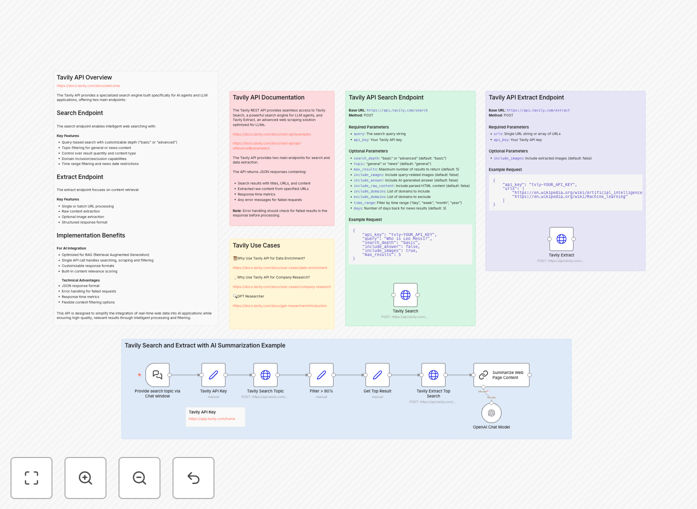
n8n workflow interface showing Tavily integration

What This Workflow Does

This automation solves the time-consuming process of manual web research by combining Tavily's powerful search API with AI processing capabilities. Instead of spending hours browsing multiple sources, copying content, and summarizing findings, this workflow automates the entire research pipeline.

The system takes your research queries, searches across multiple web sources simultaneously, extracts the most relevant content, and processes it through AI summarization to deliver concise, actionable insights. This is particularly valuable for market researchers, content creators, and competitive intelligence professionals who need to stay updated on industry trends.

How It Works

1. Query Submission

The workflow begins by accepting your research query through a webhook or manual trigger. You can specify search parameters like domains to include/exclude, date ranges, and content types.

2. Tavily Web Search

Tavily's API executes a comprehensive search across multiple sources simultaneously, including news sites, blogs, and academic publications. It ranks results by relevance and returns structured data.

3. Content Extraction

The workflow extracts key content from the top results, including article text, metadata, and relevant snippets. This avoids the need to visit each page manually.

4. AI Summarization

An AI model processes the extracted content to generate executive summaries, identify key themes, and highlight important data points. This condenses hours of reading into digestible insights.

5. Results Delivery

The final output is formatted and delivered to your preferred destination - whether that's email, a database, or collaboration tools like Slack or Notion.

Who This Is For

This workflow is ideal for market researchers, content marketers, competitive intelligence analysts, and academic researchers. Business consultants preparing client reports will save dozens of hours monthly. Content teams tracking industry trends can automate their news monitoring. Startups analyzing competitor offerings get structured data without manual collection.

What You'll Need

  1. An n8n instance (cloud or self-hosted)
  2. Tavily API credentials (free tier available)
  3. AI service API key (OpenAI or similar)
  4. Destination for results (email, database, etc.)

Quick Setup Guide

  1. Download the JSON template file
  2. Import into your n8n instance
  3. Configure your Tavily and AI API credentials
  4. Set your search parameters and output destination
  5. Test with sample queries and refine as needed

Key Benefits

80% time savings on web research: Automating search, extraction and summarization eliminates hours of manual work per project.

Comprehensive coverage: Tavily searches multiple sources simultaneously, ensuring you don't miss critical information.

Structured data output: Get clean, formatted results ready for analysis rather than raw web pages.

Scalable research: Process hundreds of queries simultaneously without additional effort.

Consistent methodology: Apply the same research criteria across all projects for comparable results.

Frequently Asked Questions

Common questions about web research integration and automation

Tavily is an AI-powered web search and extraction API that automates research tasks. It searches multiple sources simultaneously, extracts relevant content, and structures data for analysis. Businesses use Tavily to gather market intelligence, track competitors, and monitor industry trends without manual searching.

A marketing team might use Tavily to automatically collect all recent articles mentioning their competitors' new product launches. The API would return structured data including publication dates, author information, and key quotes, saving dozens of hours compared to manual collection.

  • Searches news, blogs and academic sources
  • Returns structured metadata with content
  • Free tier available for testing

AI summarization condenses lengthy articles and reports into key points, saving hours of reading time. The technology identifies main themes, extracts critical data points, and presents findings in digestible formats. Marketing teams use this to quickly analyze competitor content strategies and identify industry gaps.

When researching a new market, AI can process 50+ articles into bullet points highlighting common challenges, emerging solutions, and key players. This enables faster decision-making than reading full documents. The summaries maintain original meaning while removing redundant information.

  • Preserves key facts and insights
  • Adapts length based on importance
  • Multiple summary styles available

Market research firms, content agencies, and competitive intelligence teams gain the most from automated web research. The workflow helps consultants preparing client reports, marketers tracking industry trends, and startups analyzing competitor offerings. Any role requiring frequent web data collection sees significant time savings.

A digital marketing agency might automate daily collection of SEO trends and algorithm updates. The system would deliver summarized findings each morning, allowing strategists to focus on implementation rather than information gathering. Similarly, investment analysts can track company mentions across financial news sources.

  • Ideal for information-intensive roles
  • Scales with research volume
  • Reduces repetitive manual work

Modern extraction APIs achieve 85-95% accuracy for structured content like articles and product pages. They handle tables, lists, and main body text well, though complex layouts may require verification. The best practice is to combine automated extraction with human review for critical business decisions.

When extracting pricing data from competitor websites, the system might miss occasional promotional text or limited-time offers. For most use cases, the accuracy suffices for trend analysis, while important figures should be spot-checked. The technology continues improving with better pattern recognition.

  • Higher accuracy on structured sites
  • Visual elements sometimes missed
  • Human verification recommended

Automation complements rather than replaces human researchers. While AI handles data gathering and initial analysis, humans provide context, verify findings, and make strategic decisions. The ideal workflow combines automated collection with expert analysis, freeing researchers to focus on insights rather than data collection.

A financial analyst might use automation to collect earnings reports and market data, then apply their expertise to interpret trends and make recommendations. The system saves 80% of the collection time while the analyst adds value through interpretation and judgment calls that AI cannot replicate.

  • Automation handles repetitive tasks
  • Humans provide strategic context
  • Best as collaborative workflow

Reputable APIs like Tavily follow data privacy standards and avoid scraping protected content. Businesses should verify API providers comply with website terms of service and data protection regulations. For sensitive research, consider private proxies and rate limiting to maintain ethical data collection practices.

When tracking competitor pricing, ensure your automation respects robots.txt files and doesn't overload servers. Some sites may require special permissions for commercial data collection. Always store extracted data securely and respect copyright limitations on republishing content.

  • Check API provider compliance
  • Respect robots.txt rules
  • Secure sensitive extracted data

Yes, GrowwStacks specializes in building tailored research automation systems. Our team designs workflows that integrate with your existing tools, target specific data sources, and deliver formatted reports. Custom solutions can include sentiment analysis, trend detection, and automated alerting for new relevant content.

We've built systems for hedge funds tracking market-moving news, eCommerce brands monitoring competitor pricing, and PR agencies measuring campaign impact. Each solution matches the client's research methodology and delivers data in their preferred format - whether dashboards, email digests, or CRM integrations.

  • Custom source targeting
  • Tailored output formats
  • Integration with existing tools

Need a Custom Web Research Integration?

This free template is a starting point. Our team builds fully tailored automation systems for your specific needs.