SEO Google Sheets RapidAPI Keyword Research Marketing Automation

Automate SEO Keyword Analysis with RapidAPI & Google Sheets

Free n8n workflow to research keywords, fetch search volume & competition data, and log insights automatically to spreadsheets.

Download Template JSON · n8n compatible · Free
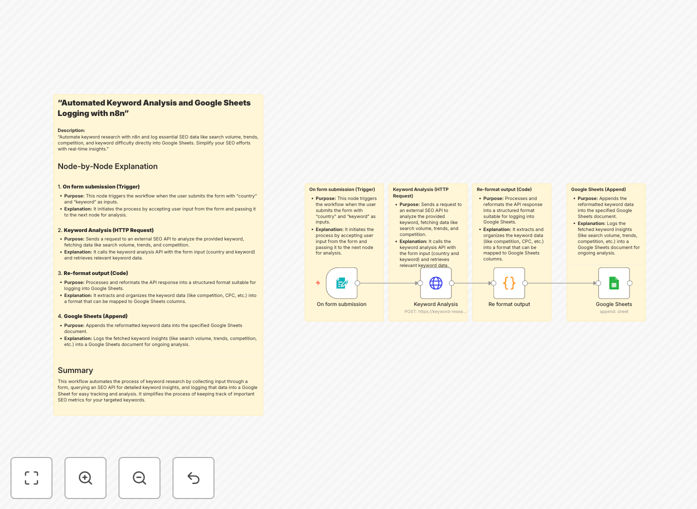
Visual diagram of n8n workflow automating SEO keyword analysis from RapidAPI to Google Sheets

What This Workflow Does

Manual keyword research is a time-consuming bottleneck for SEO teams. You juggle multiple tools, copy-paste data between platforms, and struggle to maintain consistent tracking spreadsheets. This workflow eliminates that friction by automating the entire process.

It connects directly to keyword research APIs via RapidAPI, fetches essential metrics like search volume, competition level, cost-per-click, and trend data, then structures and logs everything automatically into your Google Sheets. What used to take hours now happens with a single trigger, giving you real-time, actionable SEO intelligence without manual data entry.

How It Works

Step 1: Trigger with Keyword Input

The workflow starts when you submit a keyword (or list of keywords) along with target country parameters. This can be triggered manually, via a form, or scheduled to run automatically for regular research updates.

Step 2: Fetch Data from SEO API

n8n sends the keyword and location data to a keyword research API available on RapidAPI. The API returns comprehensive metrics including monthly search volume, keyword difficulty score, CPC estimates, trend data, and related keyword suggestions.

Step 3: Structure and Clean the Data

Raw API responses are processed and reformatted into a clean, consistent structure. This step ensures all metrics are properly labeled, numbers are formatted correctly, and the data is ready for spreadsheet import.

Step 4: Append to Google Sheets

The structured keyword data is automatically appended to your designated Google Sheets document. Each run adds a new row with timestamp, keyword, and all collected metrics, building a historical database of your research.

Pro tip: Schedule this workflow to run weekly with your core keyword list. You'll build a valuable historical dataset showing how search volume and competition change over time, revealing seasonal trends and emerging opportunities.

Who This Is For

This automation is ideal for digital marketing agencies managing multiple client SEO campaigns, in-house SEO specialists at growing companies, content creators and bloggers needing data-driven topic planning, and e-commerce businesses optimizing product page targeting. If you spend more than 2 hours per week on keyword research or struggle with inconsistent tracking spreadsheets, this workflow will transform your process.

What You'll Need

  1. n8n instance (cloud or self-hosted) with workflow editing permissions
  2. Google Sheets document with write access (create a new sheet or use existing)
  3. RapidAPI account with access to a keyword research API (like Keyword Research Tool, SerpAPI, or similar)
  4. Basic understanding of your target keywords and geographic markets

Quick Setup Guide

  1. Download and import the template JSON file into your n8n instance.
  2. Configure the HTTP Request node with your RapidAPI endpoint, headers, and authentication key.
  3. Connect the Google Sheets node to your target spreadsheet and worksheet.
  4. Test with a single keyword to verify data flows correctly from API to spreadsheet.
  5. Schedule the workflow (optional) for automatic weekly or monthly updates.

Key Benefits

Save 10+ hours monthly on manual research and data entry. What previously required switching between tools, copying metrics, and formatting spreadsheets now happens automatically while you focus on strategy.

Eliminate human error in data transcription. Automated workflows ensure every metric is captured consistently, with timestamps and proper formatting, creating reliable datasets for decision-making.

Build historical intelligence by automatically tracking keyword metrics over time. Spot seasonal trends, identify rising opportunities, and make data-backed content decisions with longitudinal data.

Scale research effortlessly from dozens to hundreds of keywords. The same workflow that analyzes 10 keywords can process 500 with minimal additional configuration, perfect for expanding content calendars or new market entry.

Centralize team knowledge in accessible Google Sheets. Marketing teams, content writers, and stakeholders can all access the same live keyword data without requesting exports or waiting for manual updates.

Frequently Asked Questions

Common questions about SEO keyword analysis automation and integration

Automating keyword research saves dozens of hours per month and ensures you're tracking the most relevant, high-opportunity terms consistently. Manual research is slow, inconsistent, and can't scale.

Automation pulls real-time data on search volume, competition, and trends directly into your analysis spreadsheets, letting you focus on strategy instead of data entry. This consistency improves the quality of your targeting decisions over time.

The most important metrics are monthly search volume (demand), keyword difficulty (competition), cost-per-click (commercial intent), and trend data. Search volume shows how many people are looking, difficulty indicates how hard it is to rank, CPC reflects commercial value, and trends reveal whether interest is growing or declining.

Tracking these together helps prioritize which keywords to target. High-volume, low-difficulty terms with rising trends represent the best opportunities for quick wins and sustainable traffic growth.

Connecting an SEO API directly to Google Sheets creates a live, centralized database of keyword intelligence that your entire team can access. Instead of exporting CSV files and manually copying data, fresh metrics flow automatically into your master spreadsheet.

This enables real-time reporting, historical tracking, and collaborative planning without version control issues or outdated information. Team members can filter, sort, and analyze the data using familiar spreadsheet tools while knowing they're looking at the latest information.

Yes, this workflow is excellent for local SEO. Most keyword research APIs allow you to specify geographic locations (country, city, region). You can automate research for location-specific terms like 'plumber near me' or 'best coffee shop [city]' and log the data separately by market.

This helps businesses with multiple locations compare demand and competition across different areas efficiently. You can create separate sheets or tabs for each location and automate population of all of them from a single workflow.

Automating SEO data collection typically saves 10-15 hours per month per marketer while improving data accuracy and timeliness. This translates to faster content planning, quicker identification of emerging trends, and more agile response to market changes.

Businesses recover the setup time within weeks and gain a competitive edge through data-driven decisions instead of guesswork. The consistent data also makes it easier to demonstrate SEO ROI to stakeholders through clear metrics and trends.

For most businesses, monthly updates are sufficient for core keyword tracking. However, for trending topics or competitive industries, bi-weekly or weekly updates provide better insights.

The advantage of automation is you can schedule updates at any frequency without additional manual work—daily for volatile markets or quarterly for stable niches—all with the same workflow. Start monthly and adjust based on how quickly your competitive landscape changes.

Beyond keyword data, you can automate competitor backlink analysis, social media engagement metrics, website traffic statistics, PPC campaign performance, email marketing analytics, and content performance scores.

Connecting these disparate data sources into a single Google Sheets dashboard gives you a unified view of marketing effectiveness and ROI. Automation turns spreadsheets from static reports into living business intelligence tools that update while you sleep.

Yes, GrowwStacks specializes in building custom SEO automation systems tailored to your specific tools, data sources, and reporting needs. We can integrate multiple APIs (SEMrush, Ahrefs, Google Search Console), create custom dashboards, set up automated alerts for ranking changes, and build workflows that match your unique SEO process.

Our team works with marketing agencies, e-commerce brands, and B2B companies to transform manual SEO operations into automated, data-driven systems. Book a free consultation to discuss your specific requirements and how automation can accelerate your SEO results.

Need a Custom SEO Keyword Automation?

This free template is a starting point. Our team builds fully tailored automation systems for your specific business needs.