What This Workflow Does
In today's fast-moving business landscape, staying ahead of competitors isn't just an advantage—it's a necessity for survival. The CrunchBase Competitor Intelligence Tracker automates what would otherwise be hours of manual research each week, giving you real-time insights into your competitors' activities, funding status, leadership changes, and market movements.
This workflow connects directly to CrunchBase's comprehensive database of company information, automatically monitoring your target competitors for critical events like funding rounds, executive hires, product launches, and expansion announcements. Instead of reactive Google searches, you get proactive alerts and organized data that helps you anticipate market shifts before they impact your business.
The system transforms raw CrunchBase data into actionable intelligence, categorizing updates by importance, tracking funding patterns over time, and identifying emerging threats or opportunities in your market space. Whether you're a startup founder watching rival funding, a strategist analyzing market entry patterns, or an investor tracking portfolio competitors, this automation delivers the insights you need without the manual labor.
How It Works
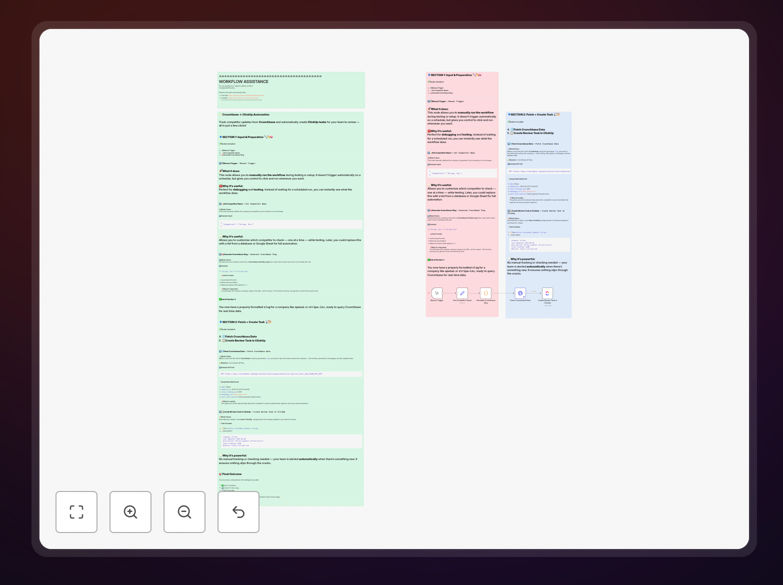
The workflow operates on a scheduled basis, continuously scanning CrunchBase for updates on your predefined list of competitor companies and delivering organized intelligence through your preferred channels.
Step 1: Competitor List Configuration
You define which companies to monitor by adding them to a simple spreadsheet or database. The system supports tracking multiple competitors simultaneously, with customizable watch parameters for different business units or market segments.
Step 2: Automated Data Collection
The workflow queries CrunchBase's API at regular intervals (daily, weekly, or custom schedules) to check for updates on your target companies. It pulls comprehensive data including funding rounds, investor details, executive team changes, news mentions, and product updates.
Step 3: Intelligent Filtering & Analysis
Raw data is processed through conditional logic to identify significant events. A $10M Series B funding round triggers a high-priority alert, while a minor leadership change might be categorized as informational. The system can also calculate metrics like funding velocity and investor quality scores.
Step 4: Multi-Channel Notification Delivery
Processed intelligence is delivered through your preferred channels: Slack for urgent alerts, email digests for weekly summaries, Google Sheets for historical tracking, or CRM updates for sales team awareness. You control what goes where based on importance and relevance.
Step 5: Historical Tracking & Trend Analysis
All collected data is stored in a centralized database, enabling historical analysis and trend identification. You can track how competitor funding patterns evolve, monitor hiring spikes that indicate expansion, and identify seasonal patterns in market activity.
Who This Is For
This automation delivers value across multiple business functions and industries. Startup founders and executives use it to monitor rival funding and valuation trends that affect their own fundraising strategies. Business strategists and market analysts rely on it to identify emerging threats and opportunities in their competitive landscape.
Investment professionals and venture capitalists track portfolio competitors and market movements to inform investment decisions. Corporate development teams at established companies use it to monitor acquisition targets and competitive threats. Sales and marketing leaders gain intelligence that helps them position against competitor weaknesses and capitalize on market gaps.
Whether you're in SaaS, e-commerce, fintech, or any competitive B2B/B2C space, understanding competitor movements is no longer optional—it's essential for strategic planning and risk management.
What You'll Need
- CrunchBase API Access: A CrunchBase API key with sufficient permissions to access company data and updates.
- n8n Instance: A self-hosted n8n installation or n8n.cloud account to run the workflow.
- Data Storage: Google Sheets account or a database (Airtable, PostgreSQL, etc.) to store competitor lists and historical data.
- Notification Channels: Access to Slack, email (SMTP), or other communication platforms for receiving alerts.
- Competitor List: A defined list of companies to monitor, including their CrunchBase organization IDs or URLs.
Pro tip: Start with 3-5 key competitors rather than trying to monitor everyone. Focus on companies that directly compete for your customers, have similar funding stages, or are expanding into your geographic markets. Quality monitoring beats quantity in competitive intelligence.
Quick Setup Guide
You can have this competitor intelligence system running in under 30 minutes with these straightforward steps:
- Download and Import: Click the download button above to get the JSON file, then import it into your n8n instance via the "Import from File" option.
- Configure CrunchBase Connection: Add your CrunchBase API credentials to the HTTP Request nodes. You'll need to sign up for CrunchBase's API access if you haven't already.
- Set Up Competitor List: Add your target companies to the Google Sheet or database table. Include company names and their CrunchBase organization IDs for accurate tracking.
- Configure Notification Channels: Connect your preferred alert destinations—Slack channels, email addresses, or CRM systems—to receive intelligence updates.
- Set Monitoring Schedule: Configure the Schedule Trigger node based on your needs: daily for active markets, weekly for stable industries, or real-time for critical competitors.
- Test and Refine: Run the workflow manually first to ensure all connections work, then adjust filtering rules based on what intelligence matters most to your business.
Key Benefits
Save 10+ hours weekly on manual competitor research by automating data collection from CrunchBase and other sources. What used to require daily browsing and note-taking now happens automatically in the background.
Receive real-time alerts about competitor funding rounds within hours of announcement, not days or weeks later. This early warning system helps you anticipate market shifts and adjust your strategy proactively.
Identify strategic hiring patterns and leadership changes that signal competitor priorities. A sudden hiring spree in engineering might indicate product development, while sales hires suggest market expansion.
Track investor movements and funding trends across your competitive landscape. See which VCs are active in your space, what rounds are getting funded, and at what valuations—critical intelligence for your own fundraising.
Build a historical database of competitor activity for trend analysis and pattern recognition. Over time, this becomes an invaluable strategic asset that informs product roadmaps, marketing campaigns, and business development initiatives.