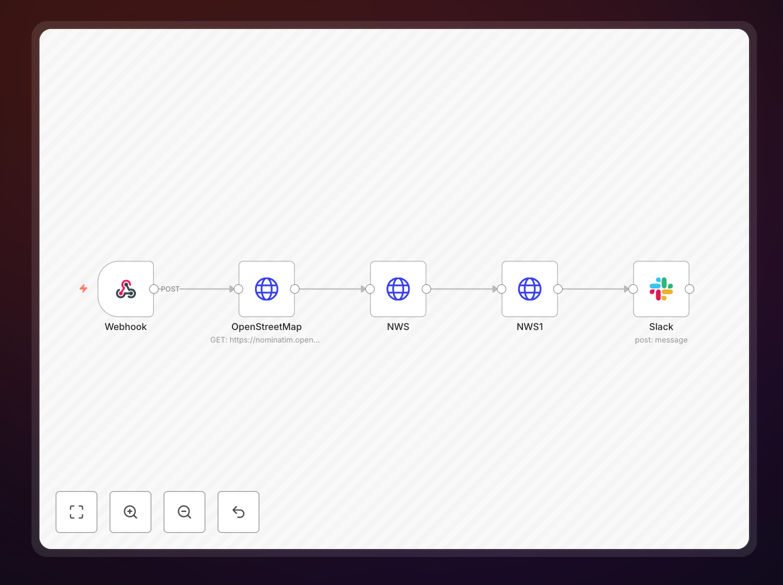
What This Workflow Does
This automation solves the problem of fragmented weather information by bringing real-time forecasts directly into your team's Slack workspace. Instead of team members checking different weather apps or websites, they can simply type /weather [cityname] and get an instant 7-day forecast from the National Weather Service.
The workflow transforms how teams access weather information for planning purposes. Whether you're coordinating outdoor events, managing field operations, or simply helping remote employees plan their week, this automation ensures everyone has access to reliable, up-to-date weather data without leaving their primary communication platform.
Beyond basic forecasts, the system can be adapted to provide weather alerts, monitor multiple locations, and integrate with other business systems. It eliminates the manual work of weather checking while improving team coordination and operational planning.
How It Works
The automation follows a clear sequence to transform a simple Slack command into detailed weather intelligence.
1. Slack Command Trigger
When a team member types /weather New York in Slack, the custom slash command sends a webhook to the automation workflow. The command includes the location parameter that the user specified.
2. Location Geocoding
The workflow converts the city name into precise latitude and longitude coordinates using OpenStreetMap or similar geocoding services. This ensures accurate weather data retrieval regardless of how users phrase location names.
3. Weather Data Retrieval
The coordinates are sent to the National Weather Service API, which returns comprehensive forecast data including temperature, precipitation probability, wind speed and direction, humidity, and detailed condition descriptions for the next 7 days.
4. Data Formatting & Enrichment
The raw weather data is processed and formatted into a user-friendly message. The workflow extracts the most relevant information for team planning and presents it in a clear, actionable format suitable for Slack's interface.
5. Slack Response Delivery
The formatted weather forecast is posted back to the Slack channel where the command was issued. The response appears as a structured message with emojis, formatting, and clear sections for different forecast periods.
Who This Is For
This automation is ideal for teams that need quick access to weather information for planning and coordination. Remote teams with members in different locations benefit from instant local forecasts. Event planning companies can check venue conditions. Construction and field service businesses can monitor worksite weather. Logistics operations can plan around weather disruptions.
Marketing teams running outdoor campaigns, sports organizations scheduling practices, and educational institutions planning activities all find value in having weather information integrated directly into their team communication platform. Even office-based teams appreciate knowing commute conditions or planning outdoor lunch breaks.
What You'll Need
- A Slack workspace where you have permission to install custom apps
- Ability to create a custom Slack app with slash command permissions
- An n8n instance (cloud or self-hosted) to run the automation workflow
- Basic understanding of webhook URLs for connecting Slack to your automation
- Optional: Multiple location coordinates if monitoring several sites
Pro tip: Start with a single location to test the workflow, then expand to multiple locations once you're comfortable with the setup. Consider creating different Slack commands for different locations your team frequently checks.
Quick Setup Guide
Follow these steps to implement this weather automation in your Slack workspace:
- Download the template using the button above and import it into your n8n instance
- Create a Slack app at api.slack.com/apps with a new slash command named "/weather"
- Configure the webhook URL in your Slack app to point to your n8n webhook trigger URL
- Set up OAuth permissions for your Slack app to post messages to channels
- Install the app to your Slack workspace and authorize the necessary permissions
- Test the command by typing
/weather [yourcity]in any Slack channel - Customize as needed for additional locations or notification formats
Key Benefits
Save 2-3 hours per week that teams typically spend checking weather across different apps and websites. Centralized weather information eliminates redundant lookups and ensures everyone works from the same data.
Improve decision accuracy with official National Weather Service data instead of varied commercial sources. Having reliable, consistent weather information supports better planning for outdoor work, events, and logistics.
Enhance team coordination by making weather information instantly accessible where teams already communicate. No more "Did you check the weather?" conversations—everyone can see the same forecast in context.
Scale across locations with minimal additional effort. Once the system is working for one location, adding more cities or regions is straightforward, making it ideal for distributed teams.
Reduce weather-related disruptions through proactive information sharing. Early awareness of adverse conditions allows teams to adjust plans before issues arise, minimizing operational impacts.