Social Media AI Analysis Market Research Bright Data OpenAI

Track Regional Social Media Sentiment with Bright Data & OpenAI

Automatically monitor brand perception across different geographic regions using AI-powered sentiment analysis from social media and news sources.

Download Template JSON · n8n compatible · Free
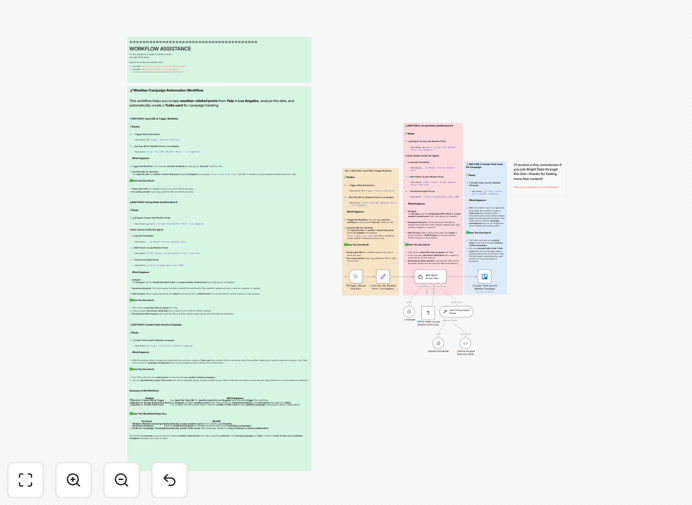
Visualization of regional sentiment tracking workflow showing social media data flowing through Bright Data and OpenAI analysis

What This Workflow Does

This automation solves a critical business problem: understanding how people in specific geographic regions feel about your brand, products, or topics in real time. Instead of manually monitoring social media and news outlets across different locations—an impossible task at scale—this workflow automatically collects, analyzes, and reports on regional sentiment.

The system queries Twitter, Reddit, and news APIs filtered by geolocation, uses Bright Data for location-specific scraping where APIs are limited, processes the content through OpenAI for sentiment and keyword extraction, then aggregates scores into daily reports stored in Google Sheets. You get a clear, data-driven pulse on regional perceptions without spending hours on manual research.

For businesses expanding to new markets, political campaigns targeting specific districts, or brands managing localized PR crises, this workflow provides actionable intelligence that was previously only available through expensive market research firms.

How It Works

1. Data Collection & Geographic Filtering

The workflow begins by collecting social media posts and news articles based on your configured keywords and geographic parameters. Bright Data handles the heavy lifting of location-based scraping, ensuring you get region-specific data even from platforms with limited API geographic filtering.

2. AI-Powered Sentiment Analysis

Each collected piece of content is processed through OpenAI's models to determine sentiment (positive, negative, neutral) and extract key themes, emotions, and topics. The AI identifies not just overall sentiment but also the intensity and specific aspects being discussed.

3. Regional Aggregation & Scoring

Sentiment scores are aggregated by region, creating a clear picture of how different geographic areas perceive your brand. The system calculates daily averages, tracks trends over time, and identifies sentiment spikes that might indicate emerging issues or successful campaigns.

4. Reporting & Visualization

Clean, structured data is pushed to Google Sheets for easy access and analysis. From there, you can connect to Data Studio, Looker, or your preferred BI tool to create dashboards that visualize regional sentiment heatmaps, trend lines, and comparative analysis.

Who This Is For

This workflow is ideal for marketing teams managing multi-location brands, political campaigns targeting specific districts, market research firms serving clients with geographic expansion plans, PR agencies monitoring regional crises, and businesses entering new markets who need to understand local perceptions before launching.

If you're spending more than a few hours weekly manually checking social mentions across different cities or countries, this automation will save you significant time while providing more consistent, data-driven insights.

Pro tip: Start with 2-3 key regions rather than trying to monitor everywhere at once. Focus on your most important markets or areas where you've recently launched campaigns to get the most actionable insights.

What You'll Need

  1. n8n instance (self-hosted version required for community nodes)
  2. Bright Data account for geographic data collection
  3. OpenAI API key with GPT-4 or GPT-3.5 access
  4. Google Sheets for data storage and reporting
  5. Social media API credentials (Twitter/X, Reddit) if accessing beyond rate limits
  6. Clear geographic parameters (cities, states, countries to monitor)

Quick Setup Guide

Follow these steps to implement this regional sentiment tracking system:

  1. Import the workflow into your n8n instance using the downloaded JSON file
  2. Configure Bright Data credentials in the appropriate nodes for geographic data collection
  3. Add your OpenAI API key to enable sentiment analysis capabilities
  4. Connect Google Sheets and specify your destination spreadsheet for reporting
  5. Customize search parameters including keywords, regions, and data sources
  6. Set your schedule (daily, weekly, or real-time based on your needs)
  7. Test with a small region first to verify data quality before scaling

Pro tip: Create a separate Google Sheet tab for each region you're monitoring. This makes it easier to build comparative dashboards and spot location-specific trends at a glance.

Key Benefits

Save 15+ hours weekly on manual monitoring while getting more comprehensive insights. What used to require a full-time staff member scanning feeds can now run automatically with consistent, unbiased analysis.

Detect regional PR issues 80% faster than traditional monitoring methods. The automated system alerts you to sentiment drops in specific areas before they become widespread crises.

Make data-driven expansion decisions with actual regional sentiment data rather than assumptions. Understand which markets are most receptive to your brand before investing in local marketing.

Measure campaign effectiveness geographically to optimize ad spend and messaging. See exactly which regions respond positively to specific campaigns and adjust accordingly.

Competitive intelligence by location without manual research. Track how sentiment toward competitors varies across different markets to identify opportunities.

Frequently Asked Questions

Common questions about social media sentiment analysis and regional tracking

Social media sentiment analysis uses AI to determine whether online mentions of your brand, products, or topics are positive, negative, or neutral. It's crucial for businesses because it provides real-time insights into public perception, helps identify emerging crises before they escalate, measures campaign effectiveness, and informs product development based on genuine customer feedback—all without manually reading thousands of posts.

For example, a restaurant chain might use sentiment analysis to discover that customers in the Northeast love their new seasonal menu while West Coast customers find it too spicy, enabling targeted menu adjustments rather than a one-size-fits-all approach.

Regional sentiment tracking filters social media and news data by geographic location, giving you market-specific insights. While general analysis tells you overall perception, regional tracking reveals how different cities, states, or countries feel about your brand.

This is vital for localized marketing campaigns, market entry strategies, political campaigns targeting specific districts, or businesses with physical locations in multiple areas. A national retailer might learn that sentiment is positive in suburban areas but negative in urban centers, prompting different engagement strategies for each market.

Manual monitoring is time-consuming, inconsistent, and doesn't scale. Teams spend hours scrolling through feeds, struggle to filter geographic data, miss important mentions, and can't process large volumes of data effectively.

Human analysis is also subjective and prone to bias, making it difficult to track trends over time or compare sentiment across different regions accurately. Automation solves these issues by providing consistent, comprehensive coverage 24/7 with objective scoring.

  • Time requirement: 20-40 hours weekly for basic coverage
  • Inconsistency: Different team members interpret sentiment differently
  • Geographic limitations: Hard to filter by location manually
  • Volume limitations: Humans can't process thousands of mentions daily

Modern AI sentiment analysis, especially using models like GPT-4, achieves 85-95% accuracy compared to human analysis for straightforward text. AI excels at processing massive volumes consistently and without fatigue, while humans better understand sarcasm and cultural context.

The most effective approach combines AI for scale with human review of edge cases and strategic insights. For regional tracking, AI provides the consistent baseline data across all locations, while your team focuses on interpreting the "why" behind sentiment shifts in key markets.

Brands with multiple physical locations, political campaigns, market research firms, PR agencies managing regional crises, e-commerce brands expanding to new territories, and SaaS companies targeting specific geographic markets benefit most.

Any business needing to understand how different communities perceive them can gain actionable insights from regional sentiment data. Even service-based businesses can use it to identify which cities have the strongest positive sentiment for potential expansion.

  • Multi-location retailers and restaurants
  • Political campaigns and advocacy groups
  • Market research and competitive intelligence firms
  • PR and crisis management agencies
  • E-commerce brands testing new markets

Yes, with proper configuration. The workflow uses OpenAI's models which support numerous languages. You can configure the AI analysis step to process text in its original language or translate it first.

For global brands, this means tracking sentiment across English, Spanish, French, German, Japanese, and other major languages simultaneously from the same automated workflow. This is particularly valuable for international companies needing to monitor perception across different language markets without maintaining separate systems for each region.

Frequency depends on your needs: daily for crisis monitoring or high-volume brands, weekly for ongoing brand health tracking, or monthly for strategic planning. Automated workflows can run continuously, but most businesses benefit from daily aggregated reports that highlight significant changes.

During product launches or PR crises, real-time monitoring with alert triggers is recommended. The beauty of automation is that you can adjust frequency without additional manual work—simply change the schedule in n8n based on your current needs.

Yes, absolutely. GrowwStacks specializes in building tailored sentiment analysis automations that match your specific business needs. We can customize data sources beyond social media, integrate with your existing CRM or dashboard tools, add competitive analysis, create custom alert systems, and design executive reporting formats.

Our team handles the technical implementation so you get actionable insights without the complexity. Whether you need industry-specific sentiment categories, integration with your internal systems, or specialized geographic segmentation, we can build a solution that delivers exactly the intelligence your business requires.

  • Custom data source integration (industry forums, review sites, etc.)
  • CRM and business intelligence tool connections
  • Competitor sentiment tracking alongside your brand
  • Executive dashboards with your branding and KPIs
  • Automated alert systems for sentiment threshold breaches

Need a Custom Social Media Sentiment Automation?

This free template is a starting point. Our team builds fully tailored automation systems for your specific business needs.